The Biology of Ageing Hair

Hair does not age in one place. The living follicle changes, the scalp environment changes, and the fibre accumulates years of physical and chemical wear. Understanding those layers is the foundation of intelligent hair longevity.
How does a hair follicle produce hair?
Each follicle cycles through growth (anagen), transition (catagen), rest (telogen) and release (exogen). Stem cells in the follicle and signals from the surrounding niche help determine when a new growth cycle begins. The dermal papilla at the base of the follicle is an important signalling centre; blood vessels, nerves, immune cells and connective tissue all contribute to the local environment.
Age, genetics, hormones, illness, nutrition and stress can influence this system in different ways. That is why ‘ageing hair’ is not a single diagnosis and why one cosmetic ingredient cannot honestly claim to control the whole cycle.

What changes at a cellular level?
• Stem-cell support can weaken. Research has shown that age-related changes in proteins such as COL17A1 can contribute to the loss of hair-follicle stem cells in experimental models.
• Oxidative stress and inflammation accumulate. Reactive molecules and chronic inflammatory signalling can affect the follicle environment and the cells that regulate growth and pigmentation.
• Cellular senescence increases. Some cells enter a state in which they no longer divide normally but continue to release signals that can alter nearby tissue.
• Mitochondrial function matters. Hair production is energy-intensive. Emerging work in androgenetic alopecia is examining how mitochondrial dysfunction and dermal papilla cell senescence may interact.
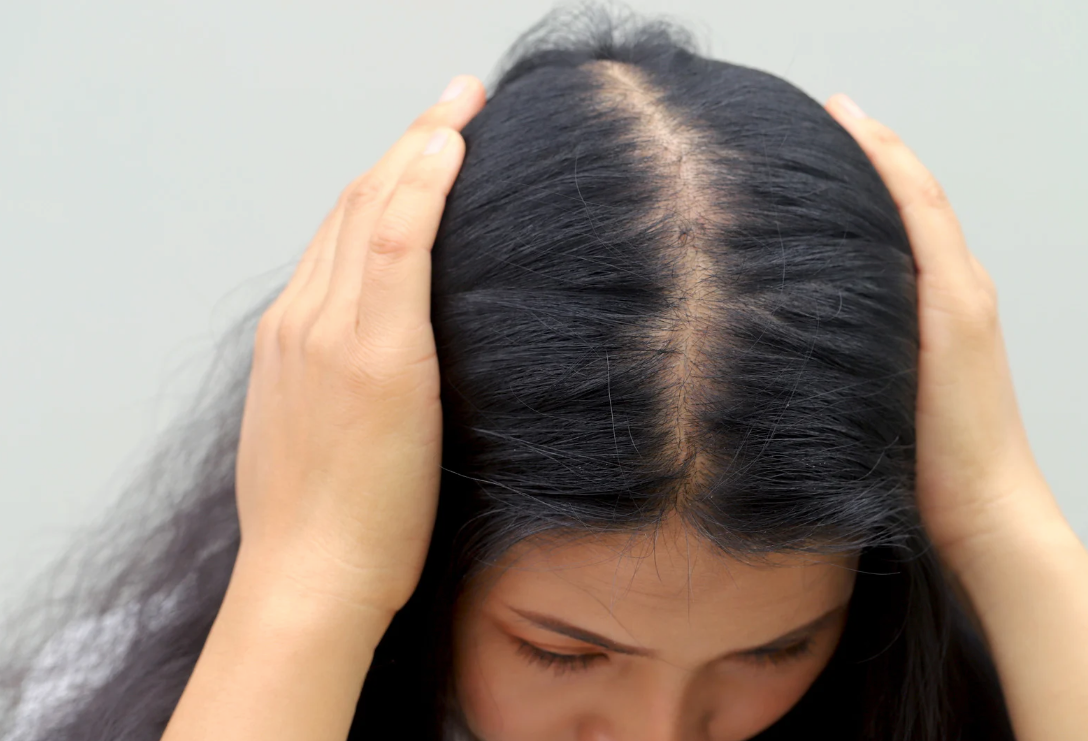
• Follicles may miniaturise. In androgenetic alopecia, genetically and hormonally susceptible follicles can produce progressively finer, shorter fibres. This is a medical process, not simply ‘dry scalp’.
How does the visible hair fibre age?
Once hair emerges from the scalp, the fibre is not living tissue. It cannot heal itself in the biological sense. Its cuticle can be lifted or worn away by brushing, UV exposure, colouring, bleach, heat and repeated swelling during washing. As damage accumulates, hair becomes rougher, more porous, less reflective and more likely to split or break.
A well-designed treatment can still make a meaningful difference: reduce friction, improve water retention, smooth damaged surfaces and reinforce weak areas. The honest word is care, not resurrection. Good formulation is impressive enough without asking it to perform necromancy.
Is the scalp simply ‘facial skin with hair’?
The scalp shares the fundamental biology of skin, but its density of follicles, sebaceous activity, microbial community and occlusive hair environment make it distinct. It is exposed to UV radiation, sweat, sebum, pollution and product residue, while receiving far less daily attention than the face.
There is no robust basis for repeating the popular claim that the scalp ‘ages six times faster than facial skin’. SHHH’s stronger argument is also the truer one: the scalp is living skin with specialised demands, and ignoring it until shedding becomes visible is late-stage beauty thinking.

What does emerging science suggest about Qi?
TCM uses Qi to describe organised vitality rather than one anatomical object. Modern biology is also moving beyond the idea that life can be understood only by listing molecules. Researchers study how metabolism, electrical membrane potentials, mechanical forces and chemical signals coordinate cell behaviour across tissues. Bioelectric signalling, for example, helps regulate growth, regeneration and pattern formation in experimental systems.
It would be inaccurate to rename bioelectricity or mitochondria as Qi. But the comparison is intellectually useful: both traditions recognise that health depends not only on material parts, but on the quality of communication and energy transformation between them. For SHHH, that becomes a practical design principle—support the system and the expression of vitality follows.
What can a daily haircare routine realistically influence?
• Scalp cleanliness and comfort. Appropriate cleansing removes excess sebum and residue without turning every wash into an assault.
• Mechanical stress. Conditioning, gentle detangling and lower heat reduce breakage and preserve length.
• Appearance and feel. Well-formulated treatments can improve softness, gloss, movement and visible fullness.
• Consistency of observation. A regular scalp ritual makes changes in shedding, sensitivity or density easier to notice early.
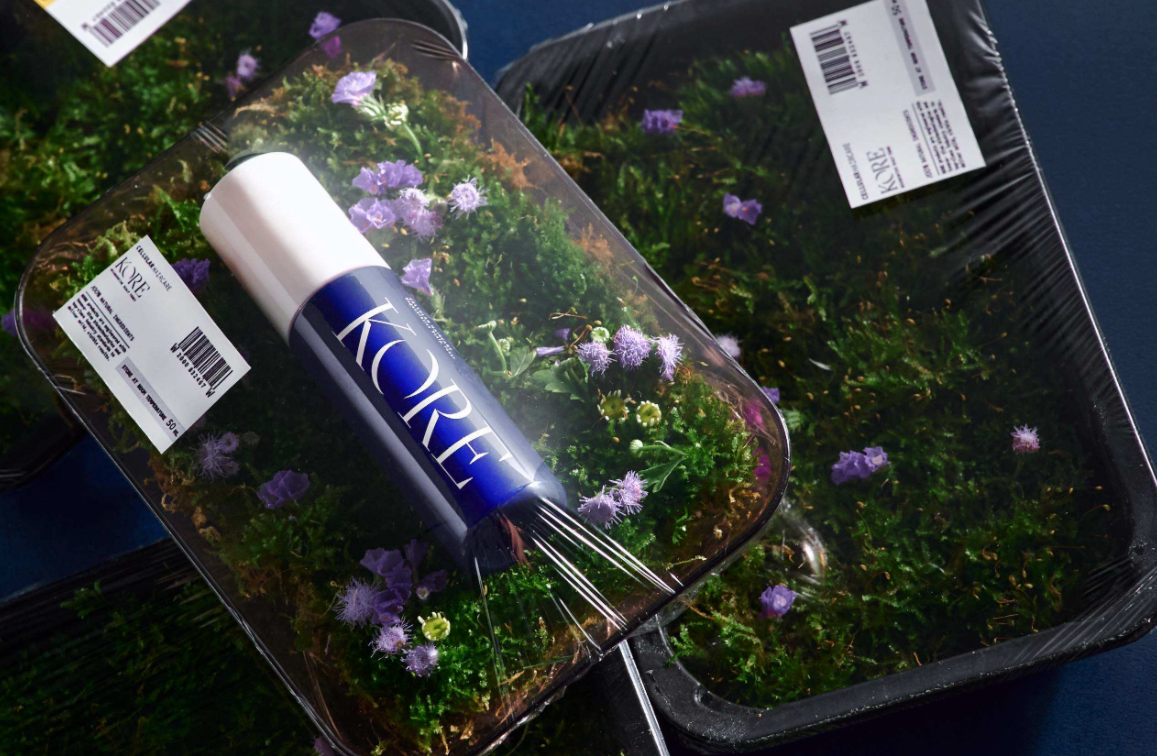
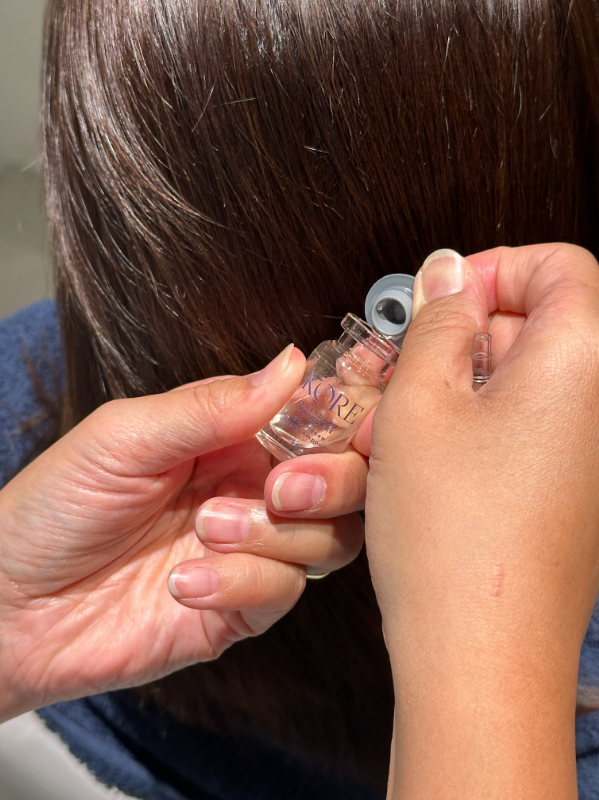
The OMG+ system approaches these layers through three finishes: Scalp for deep cleansing and scalp balance, Airy for weightless volume and hydration, and Glossy for compromised or processed fibres. KORE Regenerative Scalp Toner adds a dedicated leave-in scalp step. These formulations support a cosmetic care strategy; they should not be positioned as substitutes for medical diagnosis or licensed hair-loss treatment.

Frequently asked questions
Why does hair become finer with age?
Multiple factors may contribute, including follicle miniaturisation, changes in growth cycling, reduced fibre diameter, hormones and cumulative damage. Patterned thinning should be assessed medically.
Can damaged hair be repaired?
The fibre cannot biologically regenerate, but cosmetic treatments can temporarily reinforce weak areas, reduce friction and improve moisture, smoothness and resilience.
Do plant stem-cell ingredients become human stem cells?
No. In cosmetics, plant cell-culture ingredients are botanical sources used within a formulation. They do not transform into human follicle cells.
Can anti-ageing haircare prevent grey hair?
Greying is strongly influenced by genetics and changes in pigment-producing cells. Cosmetic haircare can support fibre condition but should not promise to reverse genetic greying.
Read next: The Hair Longevity Routine or explore OMG+ by scalp and hair condition.
Important: Cosmetic scalp and haircare can support comfort, manageability and visible hair quality, but it does not diagnose or treat medical hair loss. Seek medical advice for sudden, patchy or persistent shedding, scalp pain, sores or marked inflammation.
Scientific context and sources
Hair follicle aging is driven by transepidermal elimination of stem cells via COL17A1 proteolysis — landmark experimental study
Getting under the skin of hair aging: the impact of the hair follicle environment — review of the follicle environment
ACOD1 deficiency, mitochondrial dysfunction and dermal papilla cell senescence in androgenetic alopecia — 2026 mechanistic study
Bioelectric signaling: reprogrammable circuits underlying embryogenesis, regeneration and cancer — review of bioelectric coordination in living tissues